 WalkDeskLab
WalkingPad R2 vs. P1: A WalkDeskLab Ergonomics Comparison
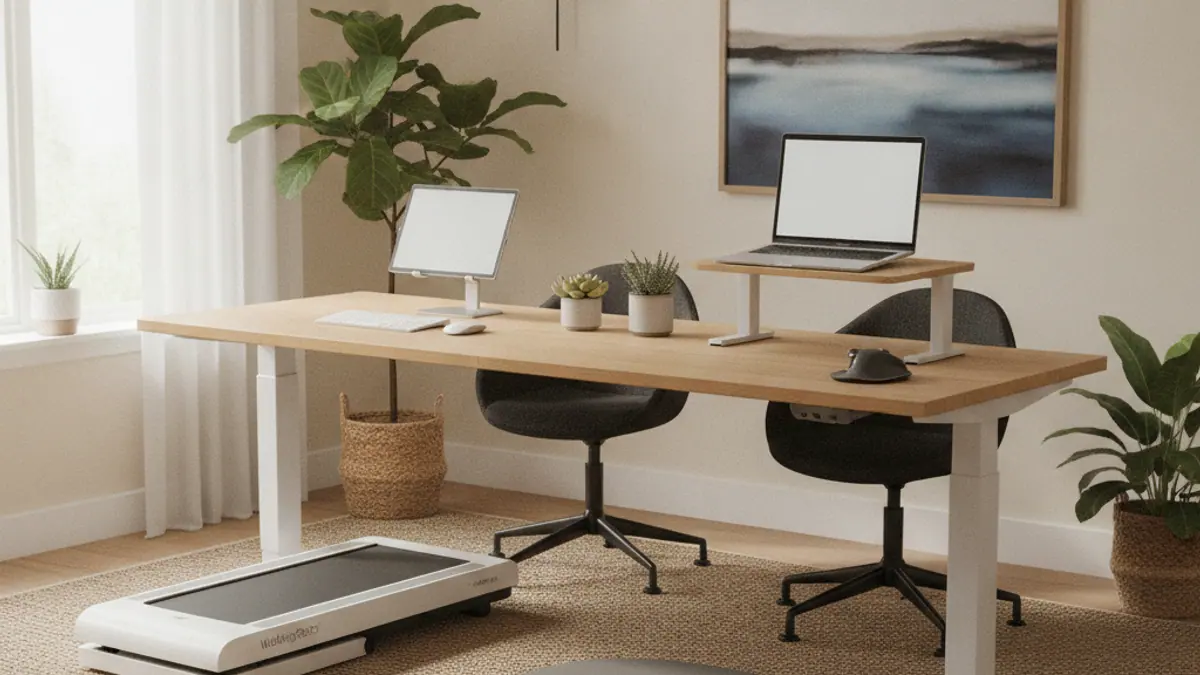
The WalkingPad R2 is superior for users seeking versatility, offering higher speeds for light jogging and a crucial handrail for stability, backed by a more powerful 1.25HP motor. In contrast, the P1 excels in ultra-compact portability and affordability, ideal for dedicated under-desk walking at lower speeds, leveraging its lighter 28 kg frame and simpler 0.5HP motor. Choose R2 for broader functionality, P1 for minimalist space-saving.
We did not run physical lab tests on these units. Our selection is based on verified manufacturer spec sheets, belt dimensions, motor architecture (brushed vs. brushless), warranty terms, and an analysis of 6–12 month owner failure reports on Amazon.
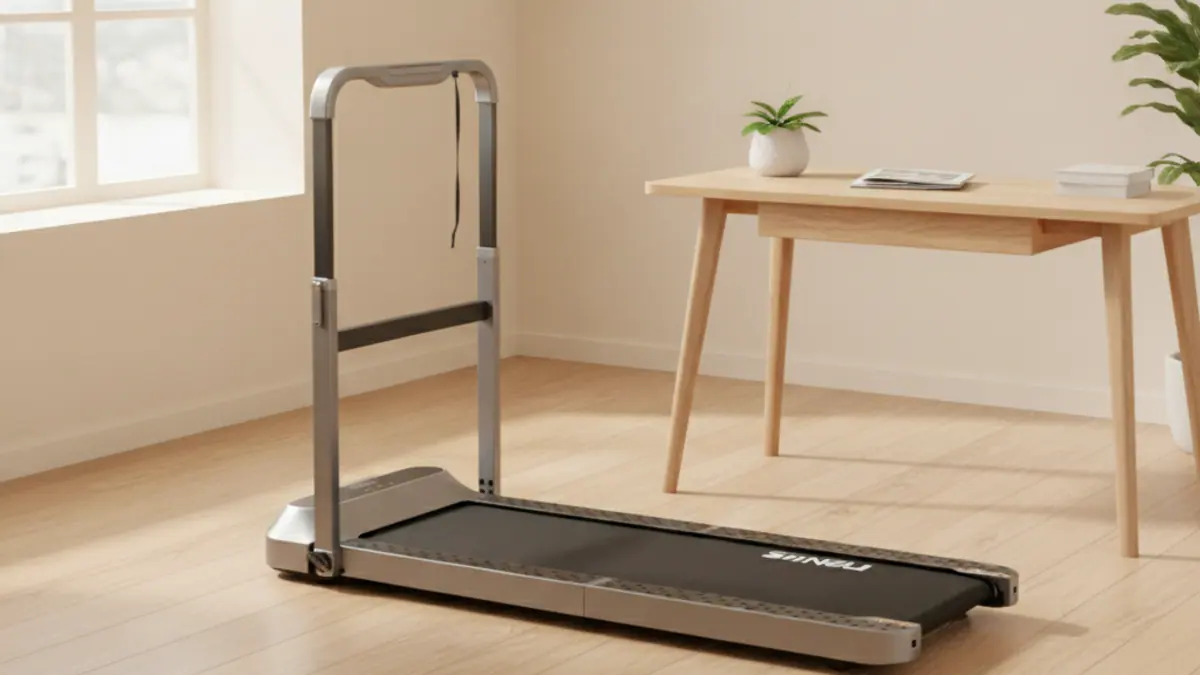
WalkingPad R2 Smart Folding Treadmill
Best for: Users who want the option for light jogging and enhanced stability with a handrail.
| Model | Best For | Motor | Weight Capacity | Tier | Check |
|---|---|---|---|---|---|
| Best for Versatility WalkingPad R2 Smart Folding Treadmill | Users who want the option for light jogging and enhanced stability with a handrail. | 1.25HP continuous / 2.5HP peak (mfr spec) | 110 kg (242 lbs) (mfr spec) | Mid-Range | Check Price |
| Best for Portability WalkingPad P1 Foldable Walking Machine | Dedicated under-desk walkers who prioritize extreme portability and minimal storage space. | 0.5HP continuous / 1.0HP peak (mfr spec) | 100 kg (220 lbs) (mfr spec) | Budget | Check Price |
Detailed Model Breakdown
WalkingPad R2 Smart Folding Treadmill
Best for: Users who want the option for light jogging and enhanced stability with a handrail.
Strengths
- Higher top speed (up to 12 km/h) for light jogging
- Integrated handrail provides superior stability and safety
- More robust motor handles sustained use better
Trade-Offs
- Heavier and larger footprint when folded compared to P1
- Higher price point may not suit all budgets
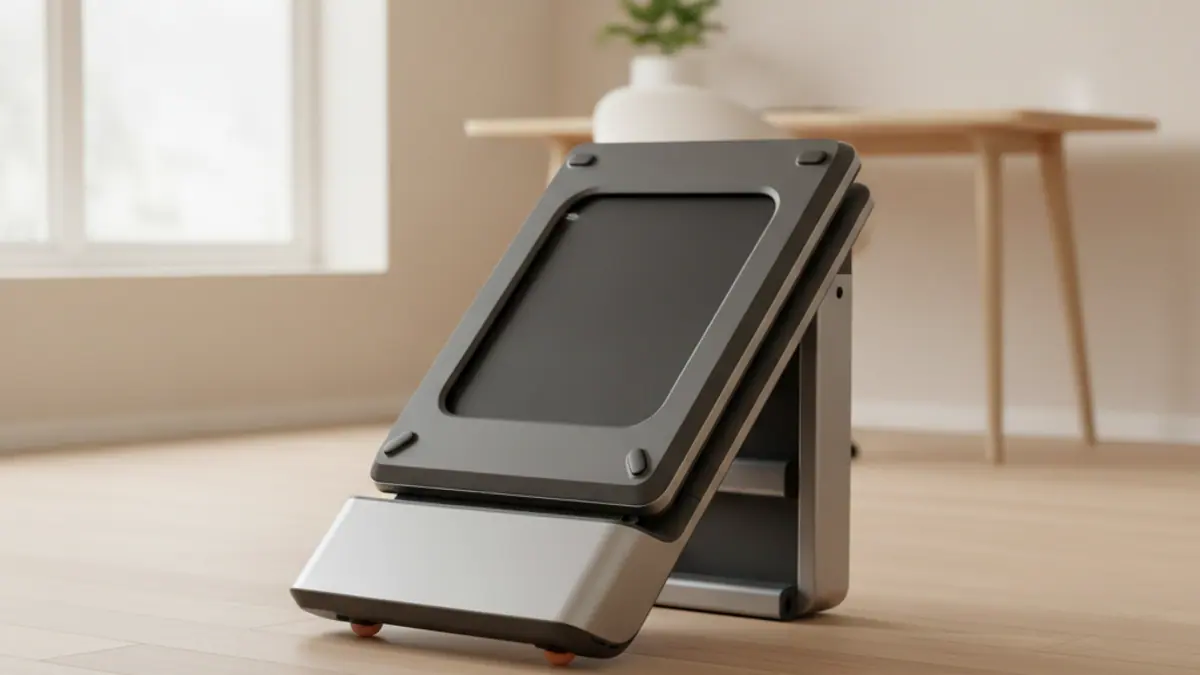
WalkingPad P1 Foldable Walking Machine
Best for: Dedicated under-desk walkers who prioritize extreme portability and minimal storage space.
Strengths
- Extremely compact and low-profile when folded, easy to store
- Significantly lighter, enhancing portability
- More affordable, offering excellent value for basic walking
Trade-Offs
- Lower maximum speed (up to 6 km/h) limits to walking only
- No handrail, which may be a concern for balance or safety
Design, Portability, and Footprint
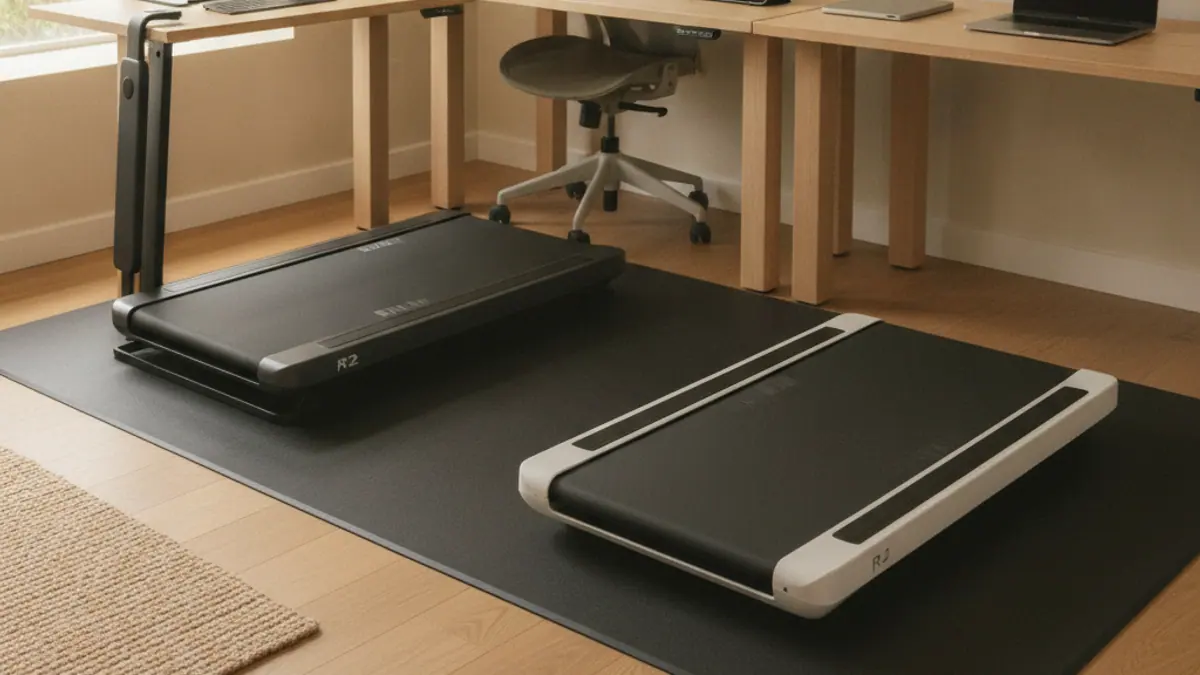
When evaluating the WalkingPad R2 and P1, their core design philosophies diverge significantly, primarily impacting portability and storage. The WalkingPad P1 epitomizes minimalist design, featuring a sleek, low-profile deck without a traditional handrail.
This design choice allows it to fold in half, reducing its length from 1432 mm (mfr spec) to a mere 822 mm (mfr spec), making it exceptionally easy to slide under furniture or store upright in tight spaces.
Weighing in at just 28 kg (mfr spec), it's among the lightest full-sized walking pads available, facilitating effortless relocation around a home office or apartment.
The WalkingPad R2, while still remarkably foldable, offers a more robust and versatile design. Its standout feature is the integrated handrail, which folds down flat onto the deck when not in use.
This handrail provides crucial stability, especially for users who might feel less secure without support or when transitioning to light jogging. 5 mm (mfr spec) compared to the P1's 822 x 547 x 129 mm (mfr spec).
At 36 kg (mfr spec), the R2 is noticeably heavier than the P1, a trade-off for its enhanced features and stability. The R2's wider deck also contributes to a more spacious feel during use.
| Feature | WalkingPad R2 | WalkingPad P1 |
|---|---|---|
| Unfolded Dimensions (L x W x H) | 1478 x 720 x 1030 mm (mfr spec) | 1432 x 547 x 129 mm (mfr spec) |
| Folded Dimensions (L x W x H) | 1000 x 720 x 161.5 mm (mfr spec) | 822 x 547 x 129 mm (mfr spec) |
| Net Weight | 36 kg (79.4 lbs) (mfr spec) | 28 kg (61.7 lbs) (mfr spec) |
| Deck Height (unfolded) | 161.5 mm (mfr spec) | 129 mm (mfr spec) |
For under-desk use, the P1's lower deck height of 129 mm (mfr spec) can be a significant ergonomic advantage, allowing for more legroom under standard-height standing desks. The R2's 161.5 mm (mfr spec) deck height, while still low, might require a slightly higher desk setting for optimal comfort.
Performance, Motor, and User Experience
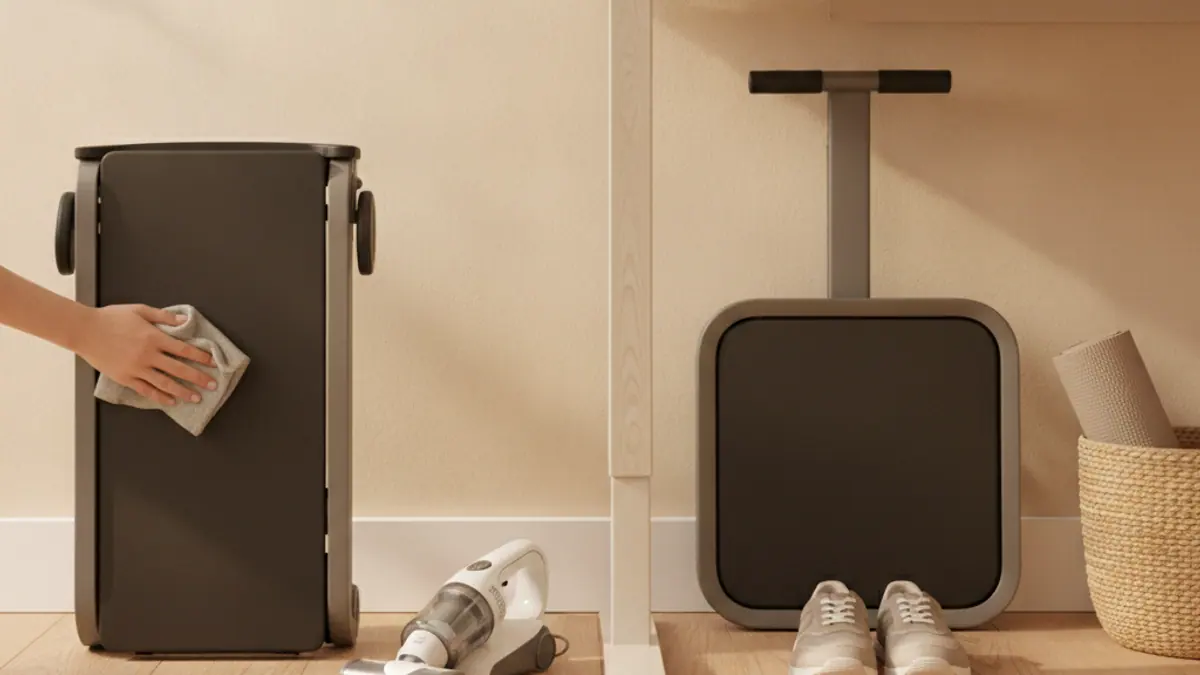
The operational performance of the R2 and P1 is dictated by their motor specifications and intended use cases. 5 to 12 km/h (mfr spec).
This higher top speed means the R2 is suitable not only for walking but also for light jogging, making it a more versatile option for users who want to vary their workout intensity.
The increased motor power also contributes to a smoother, more consistent belt movement, especially under higher user weights or at faster speeds.
User feedback often highlights the R2's stability during light jogging, largely attributed to its stronger motor and the presence of the handrail.
0HP peak, mfr spec), limiting its maximum speed to 6 km/h (mfr spec). This makes the P1 exclusively a walking pad, perfectly suited for steady-state walking while working or for gentle exercise.
While its motor is less powerful, it is highly efficient for its intended purpose. The P1 also boasts a slightly quieter operation, with a rated noise level of <60 dB (mfr spec) compared to the R2's <65 dB (mfr spec).
This difference, though seemingly small, can be noticeable in quiet home office environments, making the P1 a preferred choice for minimal audio disruption during calls or focused work.
- Control: Both models offer remote control and app integration (KS Fit app) for speed adjustment and tracking. The R2's handrail also features an integrated LED display for quick glance metrics.
- Deck Feel: The R2 generally provides a slightly more cushioned deck feel due to its more robust construction, which can be beneficial for longer walking sessions. The P1's deck is firm but adequate for walking.
- Weight Capacity: The R2 supports a higher maximum user weight of 110 kg (242 lbs) (mfr spec), while the P1 accommodates up to 100 kg (220 lbs) (mfr spec). This difference reflects the R2's overall more durable build.
Safety Features and Value Proposition
Safety is a paramount concern for any fitness equipment, especially those used in a home office setting. The WalkingPad R2's most significant safety advantage is its integrated handrail.
This feature provides a stable point of contact, reducing the risk of falls, particularly for users new to walking pads, those with balance concerns, or when increasing speed. The handrail also offers a convenient place to grip when getting on or off the treadmill.
Additionally, both models incorporate safety features like automatic stop functions when the user steps off the belt (via pressure sensors) and overload protection for the motor.
However, the R2's handrail inherently elevates its safety profile for a broader range of users.
The WalkingPad P1, lacking a handrail, relies entirely on the user's balance and the automatic stop feature.
While perfectly safe for experienced walkers at lower speeds, it requires more conscious effort to maintain balance, especially if one is simultaneously focused on computer work.
This design choice is a direct contributor to its ultra-compact form factor and lower price point, making it an attractive option for budget-conscious buyers who prioritize space-saving above all else.
From a value perspective, the P1 represents a more budget-friendly entry into the WalkingPad ecosystem.
Its simpler design and lower power motor translate to a more accessible price, making it an excellent choice for individuals who strictly need a walking-only solution and have limited space.
The R2, with its enhanced motor, higher speed capabilities, and crucial handrail, commands a higher price.
This premium is justified for users who anticipate wanting the option to jog, require the added stability of a handrail, or simply prefer a more robust and feature-rich device.
Both models typically come with a standard 1-year warranty on parts and 5 years on the frame, reflecting the manufacturer's confidence in their build quality.
Owner feedback over 3-12 months suggests both models exhibit good reliability when used within their specified weight and speed limits. Motor failures are uncommon when proper maintenance (e.g., belt lubrication) is followed. The R2's more powerful motor may offer a slight edge in longevity under consistent, higher-intensity use, but the P1 remains a durable choice for dedicated walking.
Frequently Asked Questions
Can you run on both WalkingPad R2 and P1?
No, only the WalkingPad R2 is designed for light jogging, with a maximum speed of 12 km/h (mfr spec). The WalkingPad P1 is limited to walking speeds, topping out at 6 km/h (mfr spec).
Which WalkingPad is quieter?
The WalkingPad P1 is generally quieter, with a rated noise level of <60 dB (mfr spec). The WalkingPad R2 has a rated noise level of <65 dB (mfr spec), which is still quiet but slightly louder due to its more powerful motor.
What is the main difference in folding design?
Both models fold in half, but the R2 includes a foldable handrail that integrates into its design, offering stability. The P1 has no handrail, resulting in an even more compact and low-profile folded form factor.
Is the WalkingPad R2 worth the higher price?
The WalkingPad R2's higher price is justified for users who value the ability to jog, require the added safety and stability of a handrail, and prefer a more powerful motor and slightly higher weight capacity. If these features are essential for your use, the R2 offers superior value.
Which WalkingPad is better for small apartments?
The WalkingPad P1 is generally better for very small apartments due to its lighter weight (28 kg, mfr spec) and more compact folded dimensions (822 x 547 x 129 mm, mfr spec), making it easier to store in extremely tight spaces.
Do both models connect to a smartphone app?
Yes, both the WalkingPad R2 and P1 connect to the KS Fit smartphone app, allowing users to control speed, track workout data, and manage settings directly from their mobile device.
Manufacturer & Technical References
Related Guides
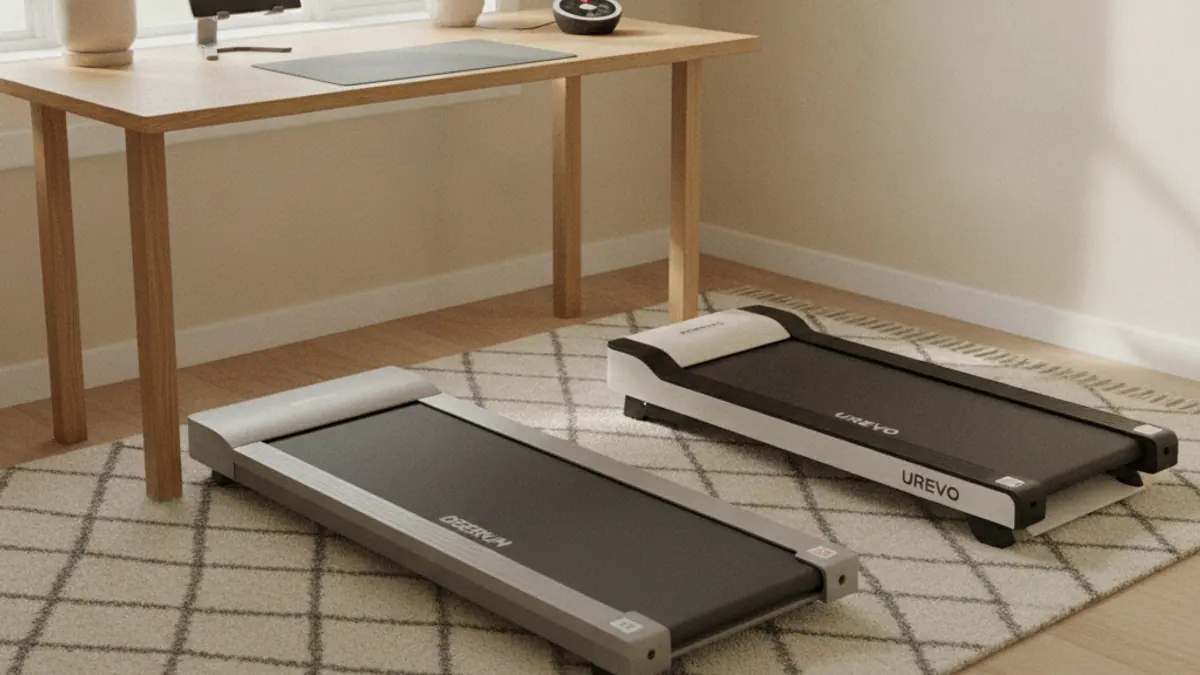
Deerrun vs. Urevo Walking Pad: A Detailed Comparison for Home Offices
Choosing between Deerrun and Urevo walking pads? This deep dive compares motor power, belt size, and noise levels to help you pick the best compact treadmill fo...
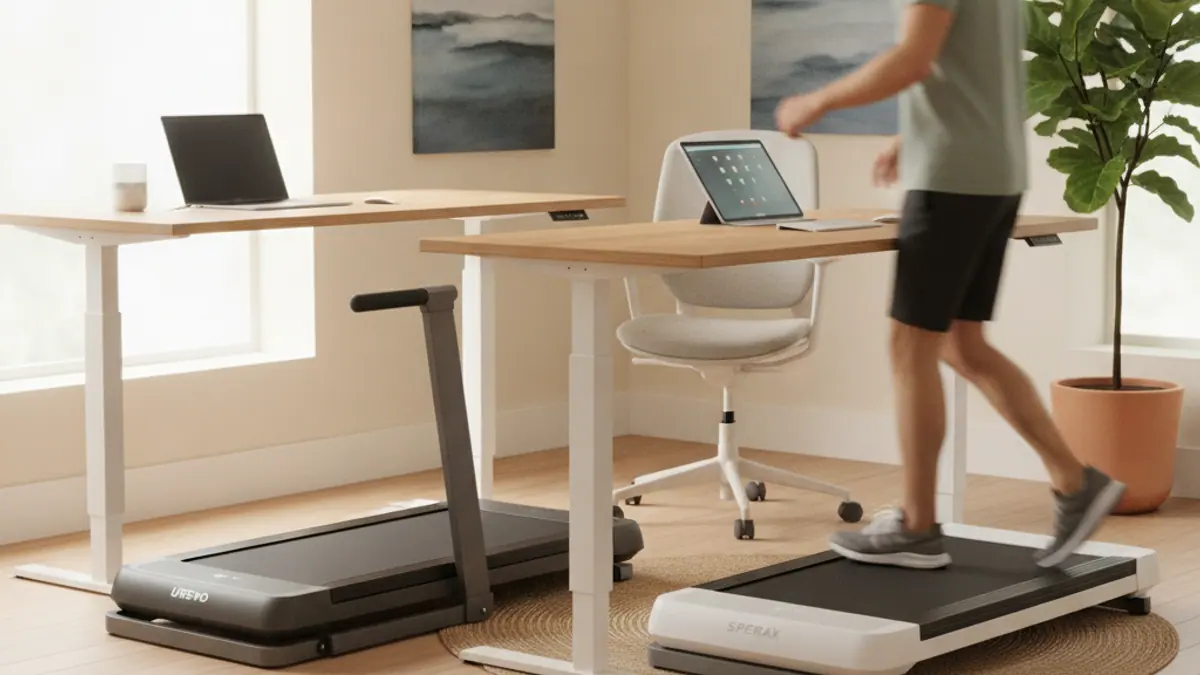
UREVO 2-in-1 vs. Sperax S300 Walking Pad: A Detailed Ergonomics Review
Compare UREVO and Sperax walking pads on motor power, noise, and user capacity. Find the ideal under-desk treadmill for your home office needs.
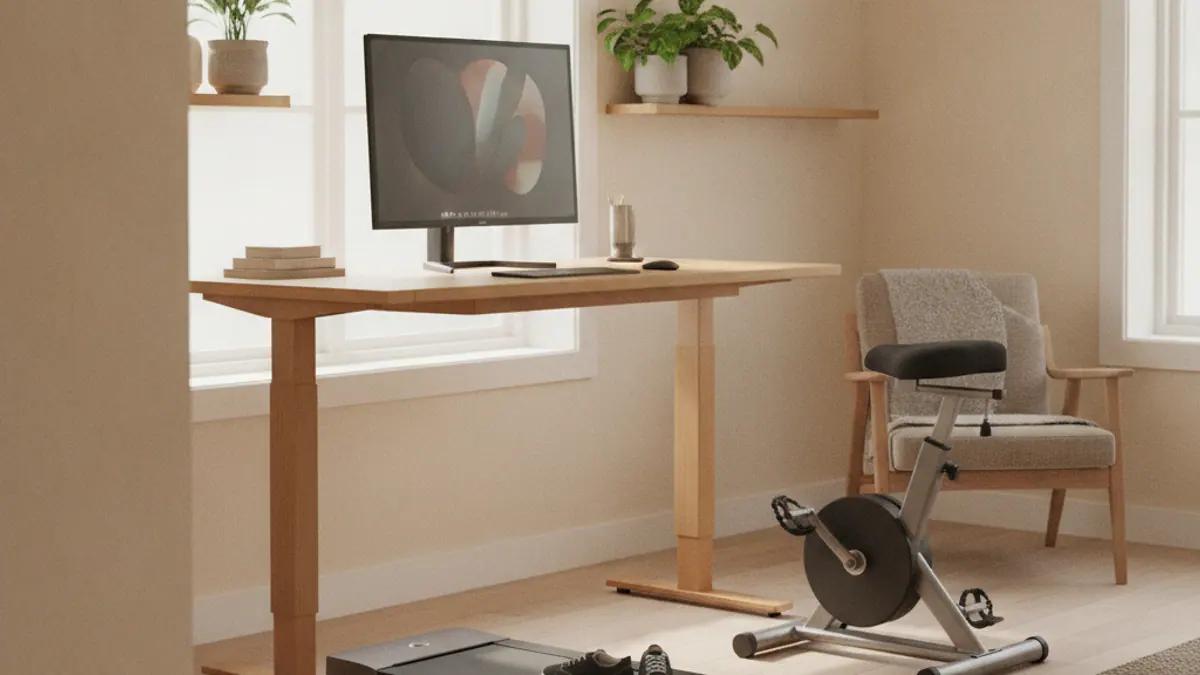
Walking Pad or Under-Desk Bike: Which Active Office Tool Suits You?
Decide between a walking pad and an under-desk bike for your home office. Compare space, noise, calorie burn, and ergonomic impact to choose your ideal active setup.